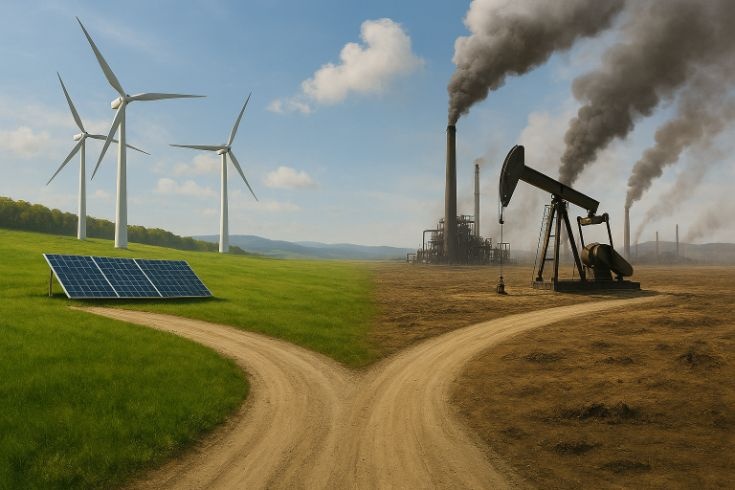
The COP30 conference in Belém (Brazil) last November ended with few bright spots and many shadows [1]. Most notably, there was no clear plan on how to reduce greenhouse gas emissions. Fossil fuels are not even mentioned in the final document. There are many reasons for this, mainly political (the U.S. did not officially participate and China is dealing with internal problems [2]) and organizational (there were more lobbyists from polluting industries at the conference than delegates from entire countries [3]). The goal of staying below 1.5°C of global warming — the most important outcome of the historic 2015 Paris Agreement — is at risk. Upcoming COPs, beginning with this year’s conference in Antalya (Turkiye), will have to confront a climate crisis that is increasingly out of control.
Why 1.5°C matters
The 1.5°C threshold is not arbitrary. It represents a level of global warming at which the long‑term impacts of climate change are believed to be relatively limited and, crucially, reversible. That is, In other words, if we had a kind of climatic “time machine,” it would still be possible to reverse the worst effects of climate change. Beyond this threshold, however, certain self‑reinforcing climate processes may become strong enough to push the system into irreversible change.
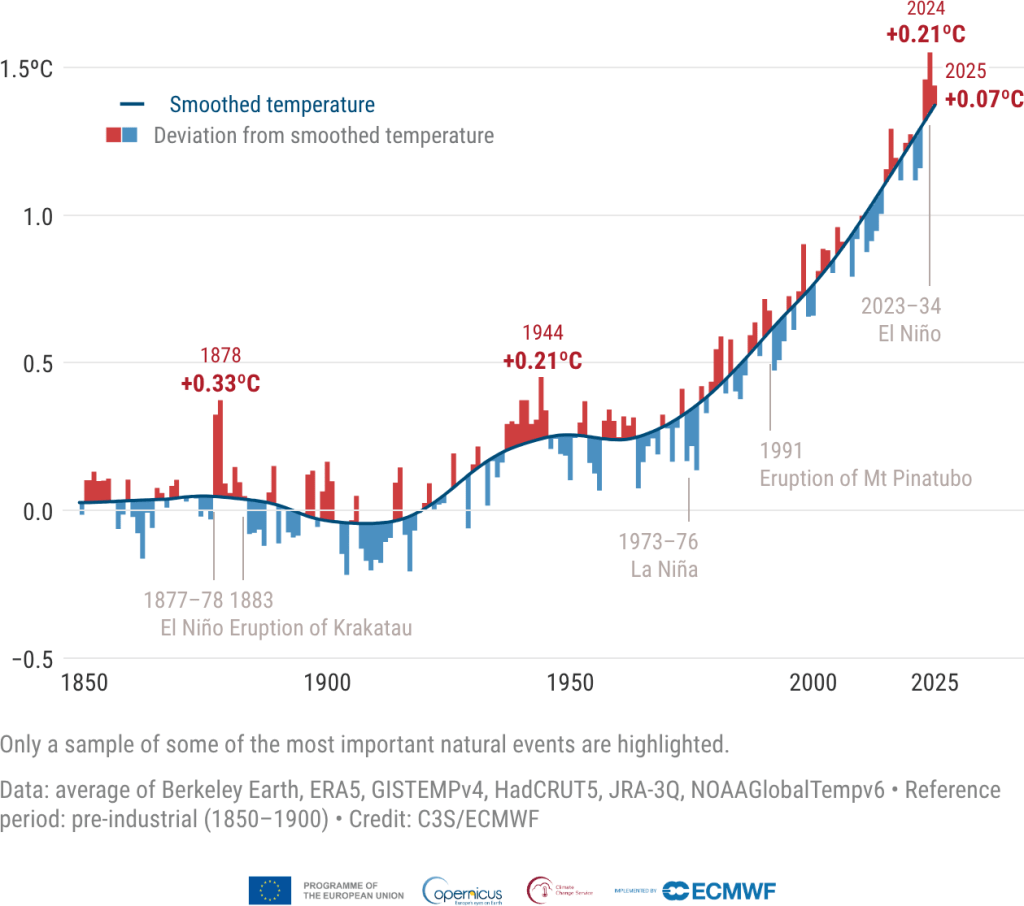
In 2025, the global average temperature was 1.47°C above pre‑industrial levels, making it the third‑warmest year on record [4]. Year‑to‑year fluctuations are normal due to events like El Niño, but the long‑term trend clearly continues upward.
Crossing the threshold
The Paris Agreement’s 1.5°C limit refers to global average temperatures measured across several decades, but already reaching that level on an annual basis is a worrying sign. There is intense interest in understanding what would happen if the global temperature exceeded 1.5°C for a decade or more, and then dropped back below it. Imagine that, in a few years, humanity finally brings greenhouse gas emissions to zero. In that scenario, the overshoot might be temporary — but would the climate system actually recover?
This long‑standing question defines the concept of overshoot, and there are two big problems around it. First, we don’t know whether reaching net zero emissions would stop global warming, or even to make temperatures decrease. Scientists disagree: one view holds that reducing emissions would eventually cool the planet; the other argues that past emissions have already committed us to further warming. The debate remains unresolved.
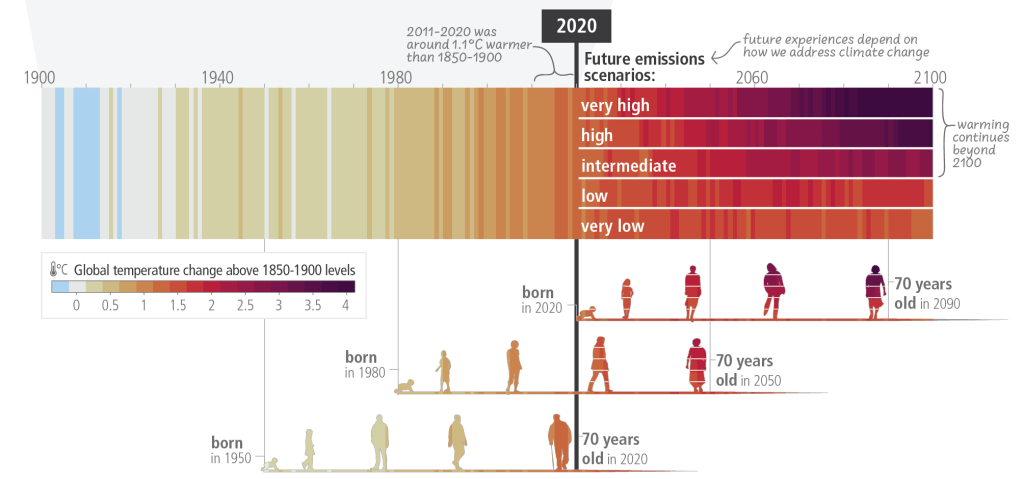
Another problem is that all current IPCC scenarios project at least some overshoot. In optimistic scenarios, temperatures fall below 1.5°C again by 2100 — which is now closer to us than 1950. But even assuming global temperatures can be brought back down (still far from certain), many regional impacts would be irreversible [5]. For example, if passing the threshold causes substantial sea‑level rise, returning below 1.5°C later would not magically restore submerged land. Entire cities (such as Venice or Amsterdam) might need to be abandoned, and vast agricultural regions could be ruined by saltwater intrusion.
A global failure
Most importantly, climate overshoot represents a failure of humanity. We have known for decades that current climate change is driven by human activities — the first theories date back to 1824. The Paris Agreement, nearly two centuries later, was the first global attempt to avoid irreversible damage. But the system for reducing emissions assumes that we remain below the 1.5°C point of no return. Once we cross it, the framework must be redesigned [7]. Countries would need to commit not only to zero emissions, but to negative emissions, an idea that currently borders on science fiction. Moreover, the financial resources needed to cope with the consequences of overshoot would be vastly higher than what is required now. Even the Loss and Damage mechanism would need a complete overhaul.
The Paris Agreement is not dead [8], but we need a major shift to eliminate greenhouse gas emissions. We have only a few years left to act and keep global warming under control. Every tenth of a degree matters. The solutions exist, and there are reasons for cautious optimism. We must abandon fossil fuels (despite “fossils” like Trump who continue to promote them) and act both individually and, above all, collectively to reduce emissions. Progress in recent years shows that change is possible — and we cannot afford to lose momentum.
Note: The original version of this article can be found here: https://www.noidiminerva.it/overshoot-climatico/.
SOURCES
[1] https://www.carbonbrief.org/cop30-key-outcomes-agreed-at-the-un-climate-talks-in-belem/
[2] https://www.bbc.co.uk/news/articles/cp84m16mdm1o
[3] https://www.theguardian.com/environment/2025/nov/14/fossil-fuel-lobbyists-cop30
[4] https://climate.copernicus.eu/global-climate-highlights-2025
[6] https://www.ipcc.ch/report/sixth-assessment-report-cycle/
[7] https://www.nature.com/articles/d41586-026-00247-y
[8] https://giorgiograffinoclimate.earth/2024/11/11/did-the-paris-agreement-fail/
 My Climate Science Blog