It is clear now: the earth’s climate is changing and it is causing a rise in average global temperature. It is still difficult to say how and how much global warming will affect our lives. Meanwhile, we can take a look at what has happened in our (more or less) recent past to understand the causes of climate change.
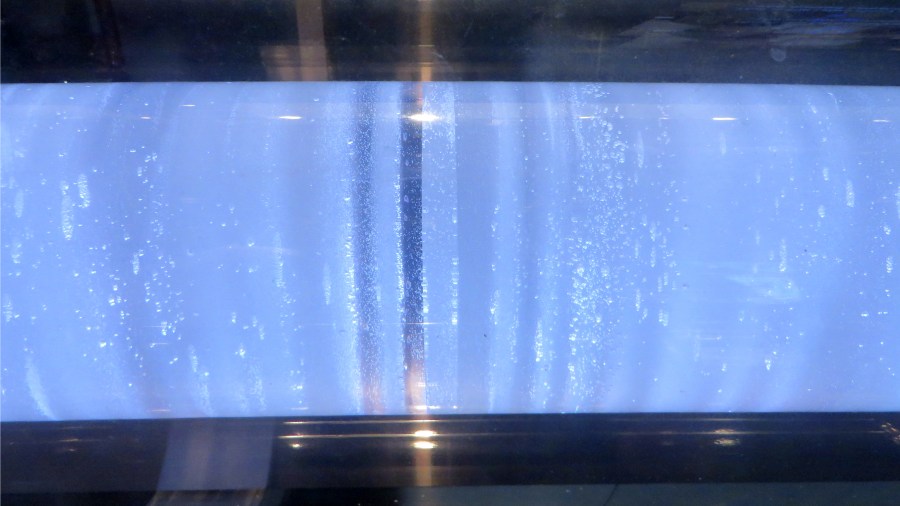
In Antarctica and Greenland, two of the most inhospitable places on the planet, scientists and technicians extract very long cylinders (ice cores), which are used to derive information about the Earth’s past climate, up to hundreds of thousands of years ago!
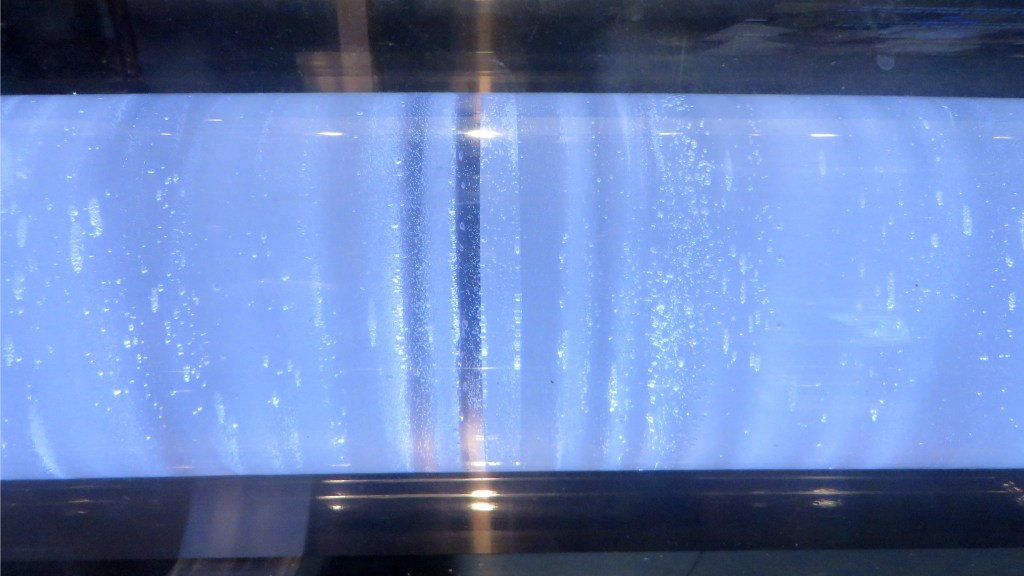
How is that possible? Long story short, polar ice works as enormous natural archives. In fact, the ice layer covering Antarctica is on average a couple of kilometres thick, up to more than 4,000 metres. This gigantic mass began to form tens of millions of years ago, and, while growing, tiny air bubbles got trapped inside. In practice, polar ice cores contain “micro-samples” of the atmosphere of the past. This tells us the composition of the air at that time, as well as the concentration of greenhouse gases.
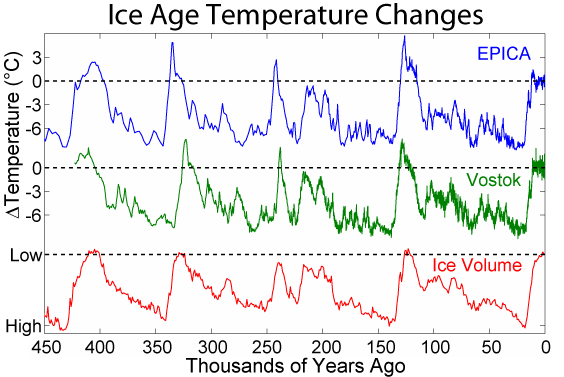
We can also estimate the change in global average temperature using climate proxies, which are techniques to indirectly measure the climatic conditions of the past. The isotopic composition of the chemical elements dissolved in ice is a classic example. Isotopes are atoms of the same chemical element, but with different atomic masses. In paleoclimatology we mostly use the isotopes of oxygen: O-16 and O-18. The ratio between the two isotopes changes with temperature, so chunks of ice formed at different temperatures have different values of oxygen isotopes ratio.
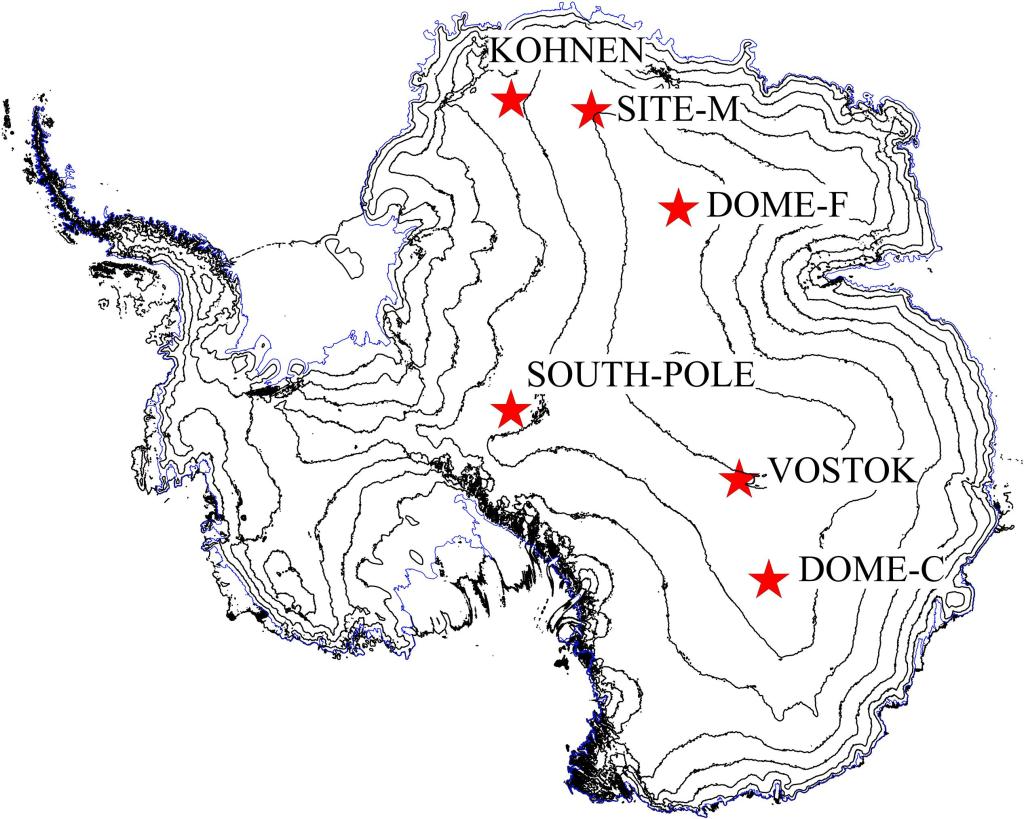
Collecting these samples is not easy, especially if you want to obtain very old data. In Vostok (the coldest inhabited place in the world), a sample of ice was taken at a depth of 3,623 metres, dating back more than 400,000 years ago. We managed to do even better, though. The EU mission EPIC collected samples in Dome A and Dome C, giving an insight on the Earth’s climate up to 800,000 years ago. Another project (Beyond Epica) aims to collect even deeper samples, going back in time to 1.5 million years ago.
The age of the ice cores is not easy to evaluate, considering we are talking about samples from thousands of metres underground; also, the uncertainties in ice cores tend to increase as the depth of the sample goes down. In any case, core samples are one indispensable tool to understand the climate variations of our past.
In order to understand something about the Earth’s past climate, we had to go all the way to the South Pole. Luckily, in recent decades station measurement networks have been created that allow us to directly evaluate climate changes in our recent history, without having to go too far away from home. These measurements show that the global average temperature, through many ups and downs, increased by about one degree in the last century.
Some contrarians, while admitting that warming is occurring, attribute the causes to natural factors and not to human activities. Beyond the lack of arguments, there is now little doubt about the effect of our activities on the climate, like this infographic explains well. Hold on: I am not saying that the climate doesn’t change naturally. In fact, among the main natural phenomena that influence the climate we can list:
- changes in the Earth’s orbit, acting over very long periods of time and with negligible effects on the recent climate;
- solar activity, whose role on the climate is still controversial, with no substantial changes over the recent period;
- volcanic eruptions, which can significantly influence the climate, but only for a few years.
Now, despite the importance of these natural processes on the climate, observations and numerical models show that the human factor is what is most pushing up global temperatures. By superimposing the observed change in temperature with those due to natural factors, we find a rather weak correlation between trends. Only by including the human forcing agents, such as greenhouse gas and sulphate emissions, ozone layer depletion, and deforestation, we can solve the riddle.
If you who want to know more about this:
- overview on ice cores;
- summary of the latest IPCC (Intergovernmental Panel on Climate Change) report, published in 2014;
- introduction to numerical weather prediction.
 My Climate Science Blog
Pingback: Change of scenario: The climate predictions – My Climate Science Blog